Showing posts with label support. Show all posts

Sunday, October 4, 2020

Support Virtual Ability When You Shop at Amazon

If you are one of the many people who use Amazon.com, you can support Virtual Ability every time you shop. Just use https://smile.amazon.com/ch/26-0613580 to launch Amazon instead of the usual “www.Amazon.com”, and Amazon will automatically donate 0.5% of your purchase price to Virtual Ability, Inc.® There is no additional cost to you (or to VAI) whatsoever. 

Virtual Ability uses the funds generated by this program to help pay for our community services, including our Second Life islands. 

Just remember to use this link when you sign into Amazon, and you will be directly helping us! 


How does AmazonSmile work? 

When first visiting AmazonSmile, customers select a charitable organization from almost one million eligible organizations. For eligible purchases at AmazonSmile, the AmazonSmile Foundation will donate 0.5% of the purchase price to the customer’s selected charitable organization. 

What is the AmazonSmile Foundation? 

The AmazonSmile Foundation is a 501(c)(3) private foundation created by Amazon to administer the AmazonSmile program. All donation amounts generated by the AmazonSmile program are remitted to the AmazonSmile Foundation. In turn, the AmazonSmile Foundation donates those amounts to the charitable organizations selected by our customers. Amazon pays all expenses of the AmazonSmile Foundation; they are not deducted from the donation amounts generated by purchases on AmazonSmile. 

Can Virtual Ability tell what I purchased? 

No. All we get is a donation deposit every few months. We have no way to be able to tell who has participated or what they have purchased.

Monday, September 28, 2020

TIP - Dealing with Rude and Mean Things People Say

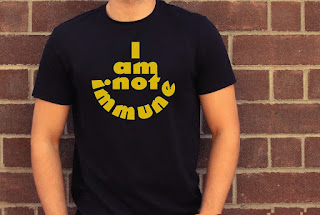
Young man wearing black t-shirt saying "I am not immune."
I am not immune

By Gentle Heron, Virtual Ability Community Member

I have multiple sclerosis and often (used to, before the pandemic quarantine) appear in public using a power wheelchair. Random strangers have said the strangest things to me. 

After asking “What do you have?” or “What’s wrong with you?” instead of what they really want to know (“Why are you using that wheelchair?”), they often throw out a follow-up statement such as “Well at least you don’t have epilepsy (or cancer or something else)” or “Oh, my husband’s niece (or other relation) died of that.”

I am a fairly positive person. I don’t believe most people intend to be mean or rude when they make these remarks. I prefer to think they are oblivious to how painful these types of statements can be to the person they are directed at.

Over the years, I have developed some strategies for dealing with this. If I can do so, I simply ignore the statement, and offer a bit of education about MS. I keep it short, thus offering the questioner a chance to escape.

However, if this is a person with whom I will be interacting in the future, I will acknowledge their statement and then change the subject. “Yes, I think it must be tough to have epilepsy. Did you hear about the tiger that got loose in Knoxville?” or “I am sorry to hear about your husband’s niece. Do you think this weather change means we will have an early winter?”

Usually people get the hint, although sometimes I have to apply that strategy a few times before they do.


Saturday, August 29, 2020

Things To Do - Volunteer to Help Seniors and Persons with Disabilities in Your Community

Picture of many different-colored hand prints
Volunteer Hands


During a pandemic, the elderly and persons with disabilities are often at the greatest risk. To protect themselves, they may become isolated and unable to access basic services or meet their daily needs for food and supplies. Isolation and loneliness have negative impacts on overall health and wellness. If you feel safe offering assistance, there are three areas in which you can volunteer. 

Delivering Meals or Groceries

Organizations that deliver food to the needy include Meals on Wheels and Feeding America. Contact local service agencies as well as the large national ones to see if they need drivers willing to bring food and groceries to needy isolated persons.

If you live in an area not served by any of these agencies, you can use social media to let people know that you are willing to shop for and deliver groceries, or run other errands such as picking up and delivering prescription medications. 

Technology Assistance

Help older family members or elderly community members stay up to date with information and keep connected with loved ones through technology. Sometimes the easiest way is to phone and talk the person through how to use their existing electronic tools, including smart phones.

Consider writing (or making a video) and sharing tutorials for downloading eBooks or audio recordings from the local library collection, or directions for emailing or for downloading a podcast. Create step-by-step written instructions for using video conferencing tools.

Remember to include tips for safe experiences online. Seniors and the disabled are frequent targets of online scammers.

If you are unsure how to start creating these educational materials, check out the free materials provided by Generations on Line

Social Support

Loneliness has large impacts on health and is increased during times of enforced isolation. Check with local civic organizations and churches to see if they can match you with a person who would benefit from a regular phone call “just to check in.”

For a good list of potential discussion topics for talking with seniors, please look here: https://www.griswoldhomecare.com/blog/senior-conversation-starters-discussion-topics-for-elderly-adults/

If you feel too shy to volunteer in this way, consider sharpening your interpersonal skills. Here is a helpful list of tips on how to engage in small talk: https://www.forbes.com/sites/christinapark/2015/03/30/an-introverts-guide-to-small-talk-eight-painless-tips/#74f0b662574a

Volunteering helps others, but helping others also benefits you. You will be less likely to feel depressed and will experience increased overall well being. Where can you volunteer safely?

Monday, December 2, 2019

December 3 is Giving Tuesday - please help support Virtual Ability

Virtual Ability is grateful for your support


Dec 3 is Giving Tuesday. Here are some ways to support Virtual Ability.

  • Support Virtual Ability when you shop at Amazon
    If you are one of the many people who use Amazon, you can support Virtual Ability every time you shop.  Just use https://smile.amazon.com/ch/26-0613580 to set up or change your charity donation. Then use https://smile.amazon.com to launch Amazon instead of the usual “www.Amazon.com,” and Amazon will automatically donate 0.5% of your purchase price of qualifying items to Virtual Ability, Inc. There is no additional cost to you (or to VAI) whatsoever and it's totally anonymous. 

    Just remember to use this link to get started:

    https://smile.amazon.com/ch/26-0613580

  • If you know a virtual world researcher, have them get in touch with Gentle Heron.  We can help them design and execute their research in virtual worlds.

  • Also, if you have contact information for a Center for Independent Living (CIL or ILC), please pass that to Gentle Heron.

  • If you know of a foundation that funds non-profit work, please let Gentle Heron know that too. We can apply for grants to help offset our SL expenses.

  • Donations are always appreciated! You can donate Linden dollars or RL cash.

You can donate Lindens in the wishing well on Virtual Ability island here:
http://maps.secondlife.com/secondlife/Virtual%20Ability/46/158/23
and you can donate through PayPal on our website here:
https://virtualability.org/make-a-donation/
You can request that a tax receipt be sent to you for cash donations, because we are a registered nonprofit.

  • One final way to help Virtual Ability is by purchasing a parcel on one of our residential islands: Cape Able, Cape Serenity or Cape Heron. Chat with our estate managers: Treasure Ballinger, Zip Zlatkis, and iSkye Silverweb. 

Thank you for your interest and support of our community.

Sunday, February 17, 2019

February 17 is Random Acts of Kindness Day


We can be kind to strangers, to those we know, and to ourselves. Kind actions are often low-key and may be fleeting. When we are the recipients of an act of kindness, we are pleased, possibly surprised or inspired, and at the same time reassured about the basic goodness of humanity. What does research tell us about the effects of acting with kindness?

A Croatian researcher states, “Research has indicated that practicing love, kindness, and compassion for ourselves and others builds our confidence and sense of coherence, helps us create meaningful, caring relationships, increases individual and community resilience and well-being, promotes human rights, physical and mental health.” https://www.ncbi.nlm.nih.gov/pubmed/30439796 Also, acting with kindness was found to be a protective factor against suicidality in women: https://www.ncbi.nlm.nih.gov/pubmed/30170585

The etymological root of the term “kindness” is shared with words like “kin” and “kinship,” indicating a basic type of positive activity among those related to us. However, kindness can be a social activity that extends to strangers when we believe that a kind action on our part will relieve a difficulty or improve a situation.

Random acts of kindness are usually undertaken with no expectation of recognition or reward. There are benefits both for the giver and the receiver of these random acts of kindness ( https://www.tandfonline.com/doi/full/10.1080/17439760.2014.965269?src=recsys ). Students who “paid it forward” with kindness showed positive mental health benefits, while the recipients of these kind actions smiled more and indicated they would be more likely to “pay it forward” in turn.

How is random kindness perceived? One research study ( https://www.tandfonline.com/doi/abs/10.1080/17439760.2011.626790 ) found that when people recalled an act of kindness that followed social norms, they felt more positive about it than about a random act. But those who recalled a random act of kindness tended to show more generosity toward strangers and even enemies.

Intentional kindness produces “subtle increases in day-to-day experiences of positive emotions.” US researchers found that evidence-based practices such as loving-kindness meditation can improve emotional wellbeing: https://www.ncbi.nlm.nih.gov/pubmed/29201247
For an audio and text guided loving-kindness meditation, with associated research: https://ggia.berkeley.edu/practice/loving_kindness_meditation

Let’s be kind to each other and to ourselves today, and every day. That will make our world a better place.

Thursday, January 3, 2019

Set daily lifestyle change goals


It is important to set one inspirational goal each day for any lifestyle change you are working toward. It doesn’t need to be a giant step forward; remember that progress seems to work best when it’s one baby step at a time.

The goal should be worded as a positive. “I will eat a piece of fruit for a healthy snack” is better than “I won’t eat junk food for a snack.” Your daily goal also should be aligned with your personal likes and dislikes. It’s not reasonable to expect your habits to change totally overnight.

So, keep your focus positive and work toward making a small step in the right direction each day. This strategy will make it more likely that you will achieve your healthy lifestyle goals.

Saturday, December 22, 2018

What Do Food Pantries Need?


Who's Hungry?!

As the school year comes to a close, food pantries are asking for donations to tide families over the summer months. These are particularly difficult for children who have relied on subsidized school breakfast and lunch programs for much of their daily nutrition.


What kinds of food should you donate to your local food pantry? Here is a list of commonly acceptable items:

  1. Peanut butter
  2. Canned or dried beans
  3. Canned fruit in juice, NOT in light or heavy syrup
  4. Canned vegetables, low- or no-sodium
  5. Low-sodium canned soups
  6. Canned tuna or chicken, in water
  7. Low-sodium chicken, beef, or vegetable broths
  8. Whole-grain, low-sugar prepared cereals
  9. Rolled oats
  10. Whole grain pasta
  11. Low-sodium pasta sauce
  12. Unsalted nuts or seeds
  13. Canola or olive oil
  14. Unsweetened apple sauce
  15. Dried fruits, no sugar added
Notice some restrictions? Even food pantries are trying to offer healthier food selections, with less sodium and sugar, and whole grains.

What else should you not donate? Anything in glass jars is a no-no. So is anything past the sell-by date.

Be sure to ask your local food pantry what they need. For instance, my local one said “Please don’t donate any more canned vegetables. What we really need are ready-to-eat items, like canned pastas in sauce, that children home alone can open and eat, with or without heating.” If you have a choice, choose pop-top lid cans instead of ones that need to be opened with a can opener.

Monday, November 28, 2016

Support Virtual Ability When You Shop at Amazon

If you are one of the many people who use Amazon.com, you can support Virtual Ability every time you shop. Just use https://smile.amazon.com/ch/26-0613580 to launch Amazon instead of the usual “www.Amazon.com”, and Amazon will automatically donate 0.5% of your purchase price to Virtual Ability, Inc.® There is no additional cost to you (or to VAI) whatsoever.

Virtual Ability uses the funds generated by this program to help pay for our community services, including our Second Life and InWorldz islands.

Just remember to use this link when you sign into Amazon, and you will be directly helping us!

How does AmazonSmile work?
When first visiting AmazonSmile, customers select a charitable organization from almost one million eligible organizations. For eligible purchases at AmazonSmile, the AmazonSmile Foundation will donate 0.5% of the purchase price to the customer’s selected charitable organization.

What is the AmazonSmile Foundation?
The AmazonSmile Foundation is a 501(c)(3) private foundation created by Amazon to administer the AmazonSmile program. All donation amounts generated by the AmazonSmile program are remitted to the AmazonSmile Foundation. In turn, the AmazonSmile Foundation donates those amounts to the charitable organizations selected by our customers. Amazon pays all expenses of the AmazonSmile Foundation; they are not deducted from the donation amounts generated by purchases on AmazonSmile.